Lebanon Professor condemned for scholarly work with Israeli counterparts

A politically charged uproar has erupted on the campus of a leafy university over the academic collaboration between a local Arab professor and two Israeli counterparts.

In a town hall at the American University of Beirut earlier this month, nearly 300 in the crowd castigated Sari Hanafi, a scholar and Palestinian activist, for his role as co-editor of the book, “The Power of Inclusive Exclusion: Anatomy of Israeli Rule in the Occupied Palestinian Territories.”
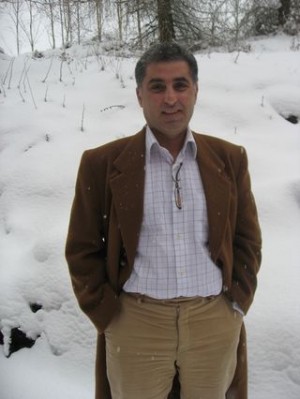
Sari HanafiHanafi ( pictured right) worked on the book with two Israeli scholars from Tel Aviv University, Adi Ophir and Michal Givoni, both of whom publicly oppose the Israeli military presence in the West Bank.

Lebanese law forbids contact between its nationals and Israel. The two countries remain technically at war. There’s also an ongoing effort to isolate Israel called the Palestinian Academic Campaign for the Academic and Cultural Boycott of Israel, which many AUB students and faculty support.

“This open collaboration between an Israeli academic and an AUB academic is unprecedented in my 50 years of service at this university,” said Tarif Khalidi, professor of Arab and Middle Eastern studies at AUB, who addressed the audience at the March 8 meeting. “I say ‘open’ because God knows what might be happening under the table. This is especially disturbing in a country like Lebanon, which is still in a state of war with Israel.”

Some have called the drive against Hanafi a McCarthy-like effort to punish a professor who defied the current Arab world orthodoxy by partnering with the enemy.

Hanafi apologized to students and faculty at the town hall but also strenuously defended himself before the hundreds assembled. “We are committed to a common cause which should open up the space we need for a vigorous yet respectful conversation on the issue of academic boycott and the publication of my recent book,” said the 47-year-old social scientist.

He said said scholars need to “distinguish between Jewish, Israeli and Zionist” as well as between individual scholars and institutions in adhering to the boycott.

“As a political sociologist working on issues of Israeli technologies of power, I will continue to find myself writing and working in ‘gray areas,’ ” he said. But he also promised that he would henceforth “be very careful to take into account” local sensitivities in pursuing his work.

Some weren’t buying it. “The current Israeli government is arguably the most vicious in the history of that state,” Khalidi said. “Any act of cooperation or collaboration is seen in Israel as a blow to the international boycott. I cannot think of any instance in which collaboration with Israeli scholars, on any level, can serve the cause of Palestine, Lebanon or the Arab world.”

The issue has roiled the campus. Ahmad Dallal, provost at AUB, issued a letter urging calm but reminded scholars they must adhere to Lebanon’s rules.

“I take this opportunity to remind all members of our community that, as an institution of higher learning with an historic presence in Lebanon and the Middle East, AUB is deeply committed to upholding the essential values of academic freedom, and will do so within the bounds of Lebanese law, which strictly prohibits collaboration with Israeli institutions,” he wrote.

Hanafi interrupted his speaking tour at Cambridge University and University of Exeter, where he had been presenting his book in honor of International Apartheid Week, to return to Beirut for what another AUB professor privately described as “a witch hunt.”

The fight has pitted student against student. An AUB Anti-Normalization Petition garnered 330 signatures by students and sympathizers against any ties with the state of Israel. Others launched In Solidarity with Prof. Sari Hanafi-No to the Arabo/McCarthyism, a Facebook page, as a counter-effort.

In Hanafi’s book, the editors insist that their scholarship is “essential for forming effective resistance to the occupation and for coming to terms with the real prospects of bringing it to an end.”

Though Israel and Lebanon continue to technically be in a state of war, even some Arab activists have urged cooperation between Arabs and Israelis sympathetic to their cause. In 2001, the Palestinian NGO Network announced that Palestinian activists and academics could cooperate with like-minded Israelis. The Van Leer Jerusalem Institute organized workshops which Palestinians and Israelis attended. It also granted a fellowship to Ophir and some of his Ph.D. students who contributed to the book.

But in 2004, the boycott-Israel drive was inaugurated, with Hanafi as one of its earliest endorsers. It urges scholars from the international community “to comprehensively and consistently boycott all Israeli academic and cultural institutions until Israel withdraws from all the lands occupied in 1967, including East Jerusalem,” according to its website.

Hanafi, Ophir and Givoni decided to begin work on their book in 2005.

Scholars from Cambridge and Exeter Universities have come to Hanafi’s support. “The book could not, and must not, be seen as a violation of [the boycott],” a statement said. “We strongly sense that a normative and literal application of the rules may sometimes produce paradoxical outcomes, as the campaign and petition against Hanafi demonstrates.” LAT

Discussion

View Comments for “Lebanon Professor condemned for scholarly work with Israeli counterparts”


Please respect the community. Comments that contain personal attacks or inappropriate language will be removed.
  • Elias

    I don’t understand the huge fuss against Professor Hanafi. After all he’s working with 2 isreali professors who are against the occupations. if he was to give them secrets or go along with the occupations fine. I agree he must adhere to the Lebanese rules but who the heck in Lebanon adhering to any rules for that matter. Why then do we allow jewish activists to Lebanon and condemned isreali occupations? So is it okay to allow such isrealis from New York? Comon people where is your common sense here? if he was harming the national security of Lebanon then i agree jail him for sure..I thought you lebanese having lots of economic issues and problems to deal with beside to get distracted by this intellectual who’s looking after palestinians interest after all.

  • Ali Fa

    oh my god shame on those educated students in AUB to oppose and make a stupid big fusss about this thing! i thought AUB students are atleast open and educated enough not to take this stupid political issues into consideration. The fight is between stupid politicians and not the people! leave the people alone and mind their own business who cares how and with who he wrote his book. as long as he is not hurting anyone leave the god damn guy alone for god sake! how pathetic,and ridiculous that people in Lebanon and particular AUB make a big fuss about that, haram you are a bunch of fools fooling yourselves!

  • tony a

    There we go again where the blind lead the blind because they can’t decipher a written rule.

    Big difference between judaism and Zionism and when we see as in our case here in Canada where we have a group called Jews for a Just Peace against the occupation – we rally with them in our marches so the media doesn’t completely kill us with their verbal diarrhoea.

    in this case, if this book is picked up, it will get a lot of sales worldwide thus spreading the message so these people need to see the benefit when not everybody in Israel is the enemy just like not everybody in Lebanon is loyal to Lebanon which Israel recognizes and feeds on.

    we need to befriend these people and in time, make them spy for us just like Israel does to disgruntled citizens in our country.

    i see nothing wrong with what this professor did. i hope he writes many more books.

  • Walid Khouri

    I WILL buy the book. BITE ME!!!

  • Adam ben Yoel

    Judaism is the religion of the Jewish people. We come from a time before transnational identity religions existed. Within our texts we speak of Israel and returning to our land. Up until around the 18th century, no one questioned that it was our goal. Zionism is a post-emancipation revival of this.

  • Adam ben Yoel

    Israelis and Lebanese generally get on very well in the diaspora.

  • Tony A

    read this article folks and tell me we should not join hands with israelis compassionate to the palestinian cause.

    Haaretz 21/03/2010

    Israelis are behaving like spoiled rich brats

    By Udi Aloni

    The terrifying specter of non-violent resistance to the occupation and the apartheid regime is hovering over the State of Israel, and all the state’s dignitaries have been recruited to battle it.

    This non-violent resistance operates both in areas under Israel’s reign of control, in the form of a popular struggle on both sides of the green line, and across the globe, through the Israeli and international affirmative response to the Palestinian call for boycotts, divestment and sanctions on Israel, until it ends the occupation and grants full equality to people from both nations living under its rule.

    As an act of solidarity with the subjugated Palestinian people, a group of Jewish Israelis has decided to join those Palestinians who have chosen the non-violent struggle for civic and national justice.

    Advertisement

    This act has given politically conscientious Jewish Israelis a golden opportunity to join a campaign against their own government without forsaking their own people. Indeed, this act leads the way towards a broader joint struggle with the oppressed people, through a rebuilding of our fundamental human values, enabling us to do away with the friend/foe dichotomy, which lies at the root of Israeli racism and anxiety.

    One should hope that this non-violent resistance, led by a popular Palestinian leadership, will evolve into a binational Palestinian-Jewish front for an equitable and egalitarian political solution.

    Right-wing groups and government organs have joined forces with all their might at the face of this new adversary who has risen up to challenge the decades-long racist theft of land from one ethnic group and its transfer into the hands of another. This is not surprising.

    It is the hysterical reaction coming from so-called “leftist” circles which ought to be considered more surprising. Those “liberals” prefer to march, shamed and humiliated, alongside the Netanyahu-Barak-Lieberman triangle, than associate themselves with enlightened Palestinians.

    From their viewpoint, violating a Tel Avivian’s right to listen to Elton John in concert here is equivalent to, and possibly worse than, violating a Palestinian farmer’s right to cultivate his land. They accuse the “radicals” of opposing dialogue, though the support for the non-violent struggle and the boycott campaign is precisely what has breathed new life into the cooperation between action groups from both nations.

    The call issued to rock musicians not to perform in Israel, which has elicited angry responses in Israel, is aimed at thwarting the normalization of occupation and apartheid, a normalization reflected in the insouciant everyday life of the city of Tel Aviv.

    The majority of Jewish Israelis are complicit in the perpetuation of the current state of affairs. When growing groups of conscientious people refuse to play the game of building a fictitious democratic sand castle on the shores of the Mediterranean, the Israeli Jew behaves like a spoiled rich brat, who would rather destroy his own castle than see natives share his world and his dreams.

    As long as the Jewish settler who is sitting on the plundered land of Bil’in, and the contractor from uptown Tel Aviv who is making a fortune from building on that land, are free to go to the Pixies concert, while the original inhabitants of Bil’in are prevented from doing so, simply because they are Arab – the concert should be regarded as an apartheid concert.

    Neither establishment-drafted artists nor the President of the Israel’s Supreme Court can erase this sign of infamy from the collective face of Israeli society. Only those modest, yet determined, groups of individuals who have joined the non-violent Palestinian struggle can succeed in this. On that day, instead of smearing them as “irrelevant”, “puritan”, “condescending” and “self-hating”, the following statement will apply to them: never was so much owed by so many to so few

blog comments powered by Disqus
ArabicChinese (Simplified)EnglishFrenchGermanItalianPersianRussianSpanishTurkish

Translate Ya Libnan


Advertise With Us


Follow Ya Libnan on Twitter @ya_libnan

Recent Comments

Ya Libnan Café Ya Libnan Online Shop